Insights
Notes from the engine room of the Mittelstand.
No listicle filler. Specific processes, specific industries, specific failures — and what they cost.

How to Calculate On-Time Delivery: OTD, In Full and OTIF on Sixteen Order Lines
Your dispatch report says on time and the customer's scorecard says late. This worked example takes sixteen order lines from one month through on-time delivery, in full and OTIF, and shows five counting choices that move the figure.
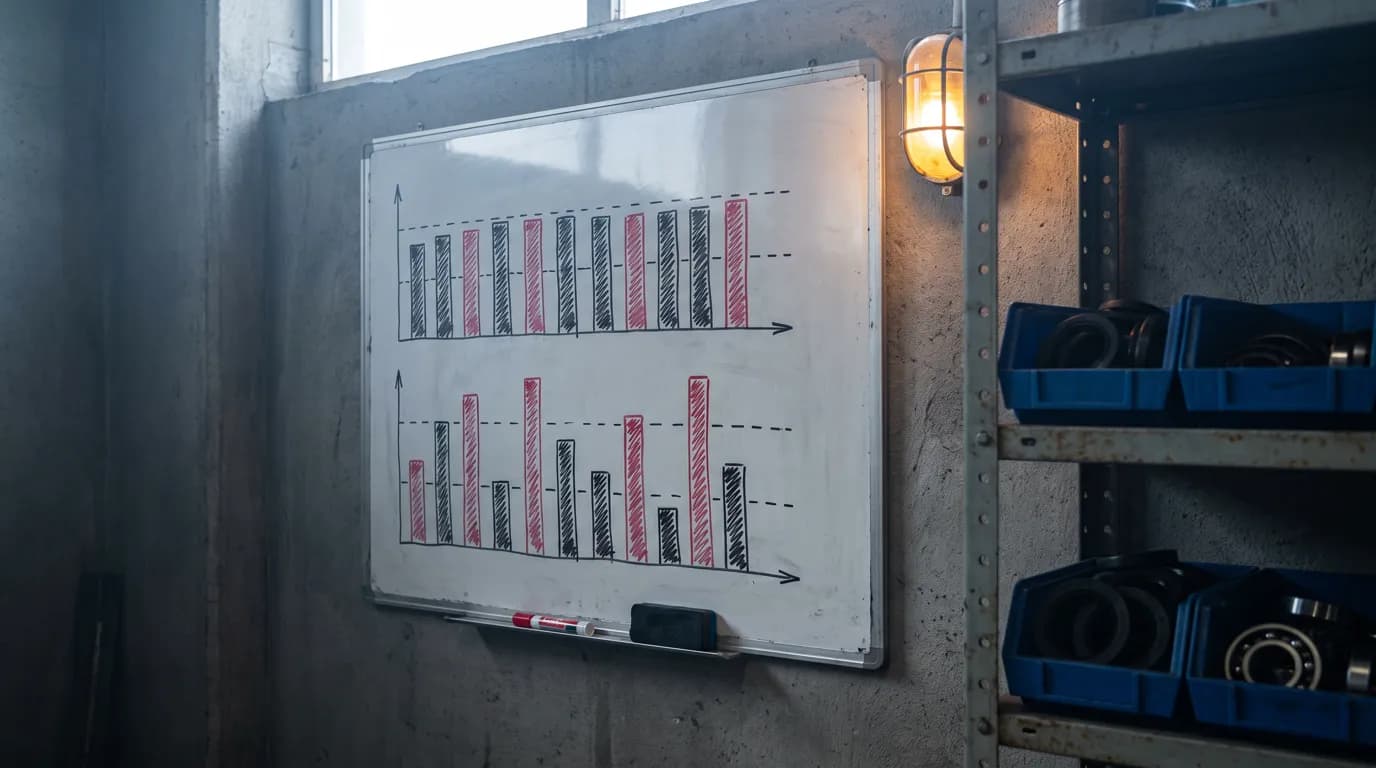
How to Do an XYZ Analysis: Measuring How Steady Demand Is and Reading the ABC XYZ Matrix
An XYZ analysis sorts the parts in a store by how much their monthly consumption swings. This article works one through on fifteen spare parts with twelve months each, combines it with the ABC classes and shows five counting mistakes with numbers.
How to Do an ABC Analysis: Where the Money Moves Through Stock and What Each Class Means for Ordering
An ABC analysis ranks the parts in a store by their yearly consumption value and splits the list into three classes. This article works one through on fifteen spare parts and shows five counting mistakes with numbers.

How to Calculate Economic Order Quantity: What the EOQ Formula Does and What It Assumes
The economic order quantity is the quantity per order at which a year's ordering cost and holding cost add up to the least. This article works the EOQ formula through on one stock list and shows five mistakes with numbers.
Inventory Turnover and Days on Hand: What the Total Hides About Each Item
Inventory turnover tells you how often a stock is replaced in a year. Days of inventory on hand tells you how long it lasts. This article works both out on one stock list of six items and shows five counting mistakes with the wrong and the right number.
How to Calculate Reorder Point: The Formula Is Short, the Lead Time Is the Hard Part
The reorder point is the stock level at which you have to order so the delivery arrives before you start using safety stock. This article works it out for six items in a spare parts store and shows five counting mistakes with numbers.
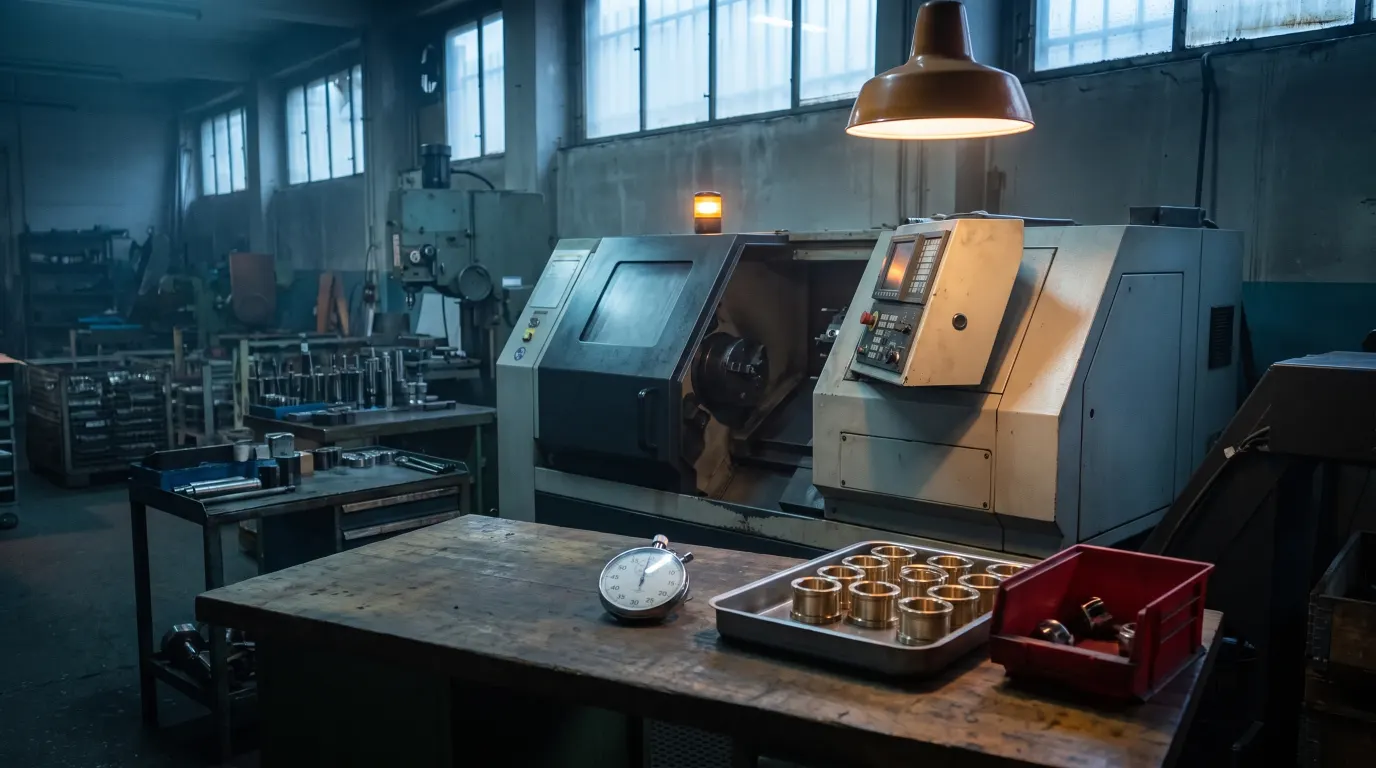
How to Calculate OEE: One Shift, Worked Through Step by Step
The OEE formula fits on one line. The hard part is deciding which minutes and which parts go into it. This article works through a single shift on a lathe, then shows six counting mistakes that make the figure look good and mean nothing.
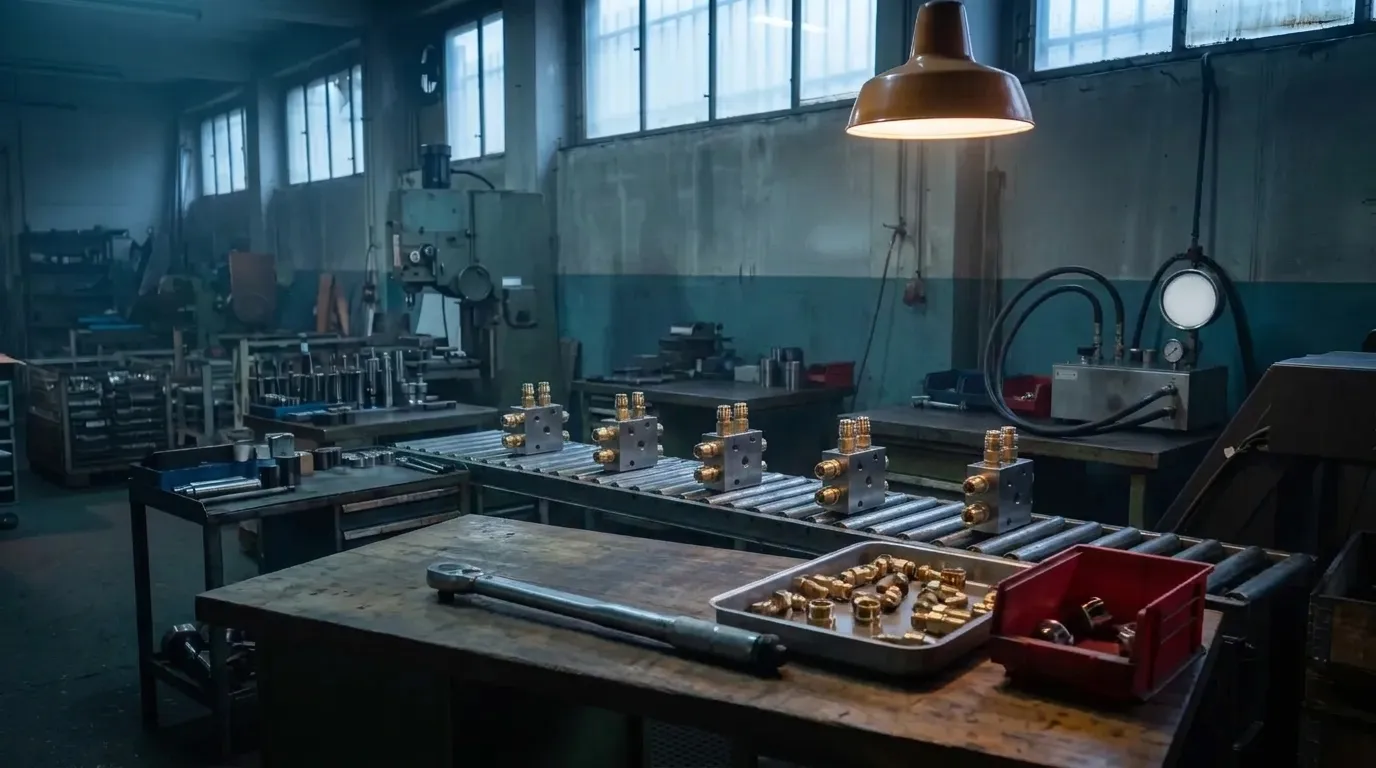
Takt Time: What the Customer Needs and What the Cell Can Make
Takt time is the interval at which your customer needs one part. This article works it out for one shift in an assembly cell, sets it against cycle time and lead time, and shows five counting mistakes with the wrong and the right number for each.

Automating order entry: PDF and email orders into the ERP without retyping them
A customer emails a purchase order as a PDF, and someone on the order desk keys it into the ERP. This article costs that out, compares the routes around it and walks through an automated flow, including the places where it breaks.
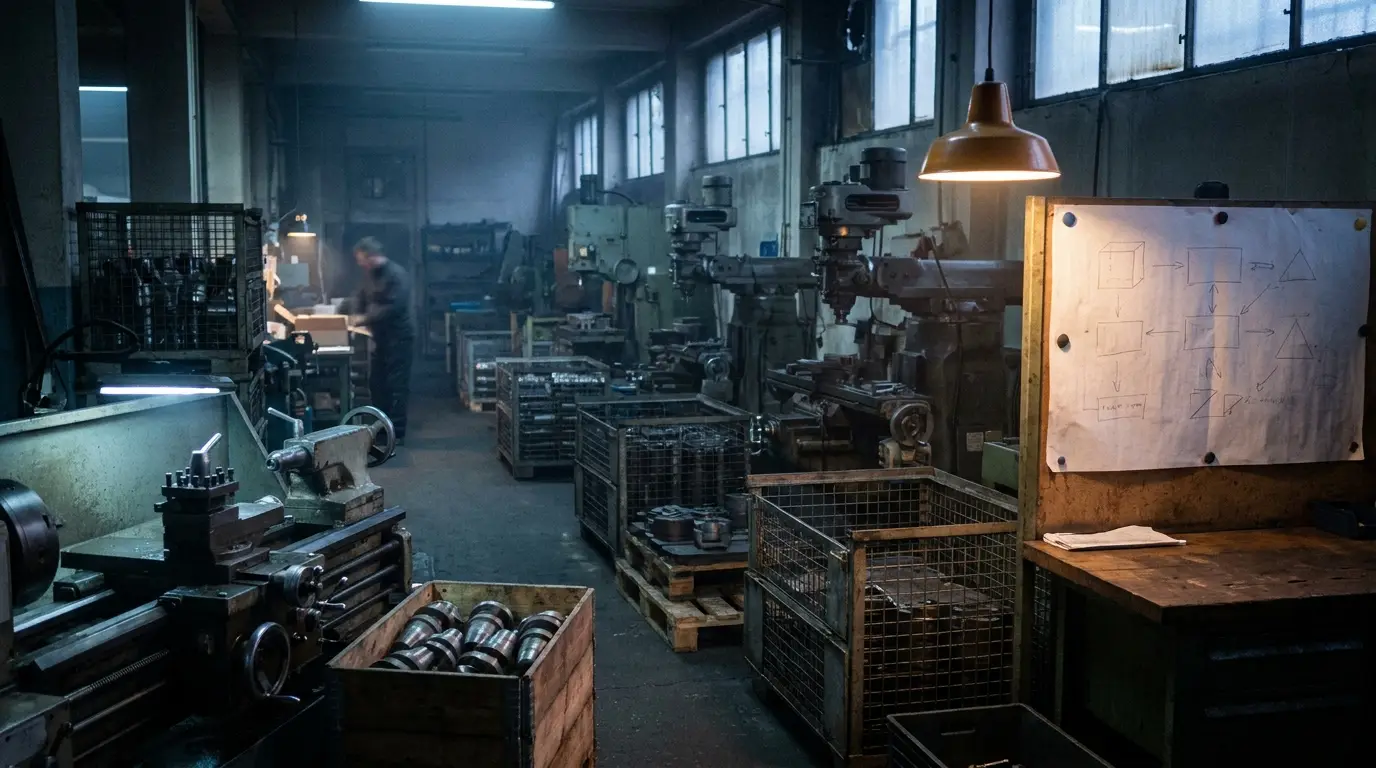
Value Stream Mapping for a Small Manufacturer: A Worked Example
Value stream mapping makes sense fastest on a case where every number is filled in. Here is one: a bearing flange in a small machining shop, from the current-state map and its data boxes to a future state you can recalculate yourself.

Goods receipt inspection checklist: what to check at the dock, and who checks it
A goods receipt inspection checklist in five stages, from the expected delivery to the supplier complaint. Each check names what you compare against and who owns it.

SMED in a Small Plant: Changeover Reduction Step by Step
SMED sounds like something for car plants with a lean department of their own. At its core it asks one question of every task in a changeover: does the machine have to be stopped for this? Here is how to apply it with a handful of machines.

The Annual Count Is an Invoice for the Errors, Not a Stock Correction
Once a year you count, book the difference and everyone is relieved. But the difference isn't a result, it's the bill for twelve months during which your business planned against stock figures that weren't true.
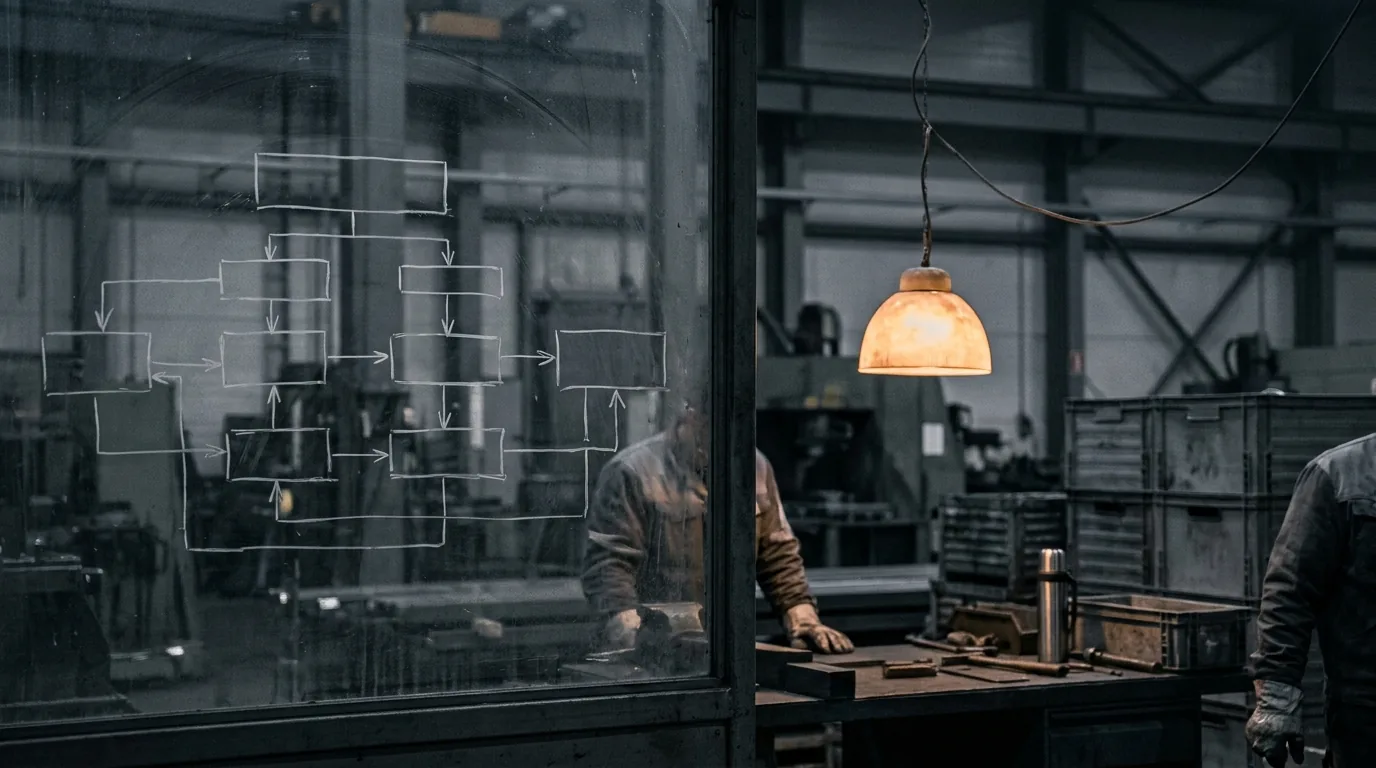
Modelling the to-be process without romanticising the current one
A to-be process sets out how a piece of work should run after the change, step by step, with owners and data. Crossing out the bad parts of the as-is map won't give you one. Three decisions will, as long as somebody makes them on purpose.

Why We Work at a Fixed Price — and What That Changes for You
A day rate rewards attendance. A fixed price rewards a result. The distinction sounds like commercial detail, but it changes the work itself — and it shifts a risk that in the mid-market has almost always sat with the client.

Complaints Are Your Best Process Diagnostic — and the Only One You've Already Paid For
Complaints get handled, documented and filed. Treated as a dataset, those same records show precisely where your process systematically produces errors — at no cost, because the data collection happened long ago.
Lead Time: Why Your Estimate Is Always Too Low
Ask five people how long an order takes and you'll get five similar numbers, all of them too low. They add up the work and leave out the waiting. Here is the lead time formula, one order followed through six stations, and five ways the count goes wrong.

Media Breaks: What Retyping That PDF Really Costs
An order arrives as a PDF and someone types it into the ERP. It takes four minutes and looks harmless. The time is the smaller item — the larger one is the error rate, and you pay for that somewhere else entirely.

What Survives After the Consultant Leaves — and Why Usually Nothing Does
Six months on, the new process runs like the old one again. That is rarely the fault of the concept and almost never the fault of the workforce. It happens because three things were never settled during the project — none of which appear in any presentation.
Master Data: The Quiet Error Source That Looks Like a System Problem
When the ERP produces wrong answers, everyone debates the ERP. In most cases it is calculating correctly — just from data nobody has checked in years. How to recognise it, and why replacing the system takes the problem with it.

Changeover Time: The Hours That Appear in No Costing
Your costing carries a changeover time. It usually dates from when the machine was new and has been carried forward ever since. What actually happens on the shop floor regularly differs from it by a factor of two — with consequences for batch sizes, delivery dates and prices.

Goods Receipt Isn't a Side Show — It's Your Most Expensive Bottleneck
No business willingly invests in goods receipt. It's treated as an unloading point, not a process. Which is precisely why delays start there and arrive two departments later looking like a production problem — where they get solved expensively and wrongly.

What a process audit really finds (with an example)
Almost every business holds a firm conviction about where its bottleneck sits. And almost every time, it sits somewhere else. An invented example from the shop floor shows why the suspected cause is rarely the real one.
Excel as a shadow ERP: how to spot it and what it costs
A shadow ERP is the set of spreadsheets a company plans and orders with because the ERP can't. Here are the signs, an illustrative cost calculation, and the order in which to move those sheets back into a system.

Why order confirmation in wholesale takes four days
A customer orders on Monday and hears nothing back until Thursday. Not because anyone is slacking, but because three handoffs sit between the inbox, the ERP, and the warehouse. Here is what that costs — and how to put a stop to it.